

About the Landings
History & Future
Before Development
Long before roads, neighborhoods, and gated communities lined Sarasota Bay, the land that would eventually become The Landings was a rich coastal habitat shaped by nature and human history alike. Two to three thousand years ago, indigenous peoples of the Manasota culture and later the Calusa Chiefdom settled along these shores, drawn by the abundant aquatic resources and freshwater springs found in the lagoon and Cloisters Creek. Shell mounds built by these early Floridians supported their communities, while the dense canopy of trees and the location behind Siesta Key, provided refuge during powerful coastal storms.
Bertha Palmer
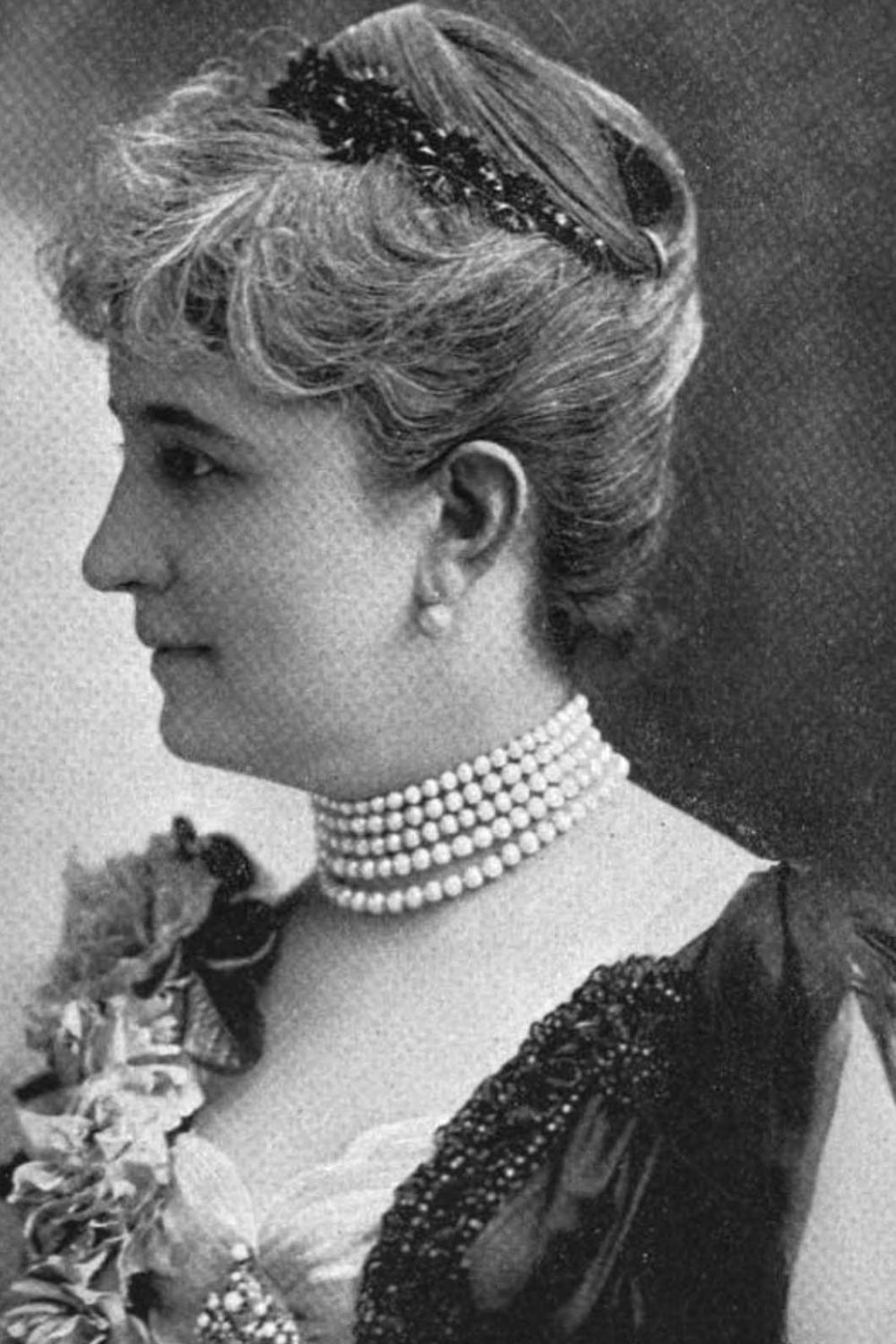
The story of modern Sarasota cannot be told without Bertha Honoré Palmer. Born in Louisville, Kentucky, in 1849, Bertha married Chicago businessman Potter Palmer and became one of the most influential figures in Chicago society. Yet it was her move to Florida in the early twentieth century that would permanently shape Sarasota County.
When Bertha first arrived in Sarasota in 1910, much of the region was considered wild, swampy, and inhospitable. Where others saw hardship, she saw possibility. Within months she had purchased nearly 90,000 acres of land, eventually expanding her holdings to roughly 140,000 acres — nearly a quarter of what would become Sarasota County. Her properties included land now occupied by Bee Ridge, Osprey, and portions of what is today Myakka River State Park.
Bertha Palmer became far more than a wealthy landowner. She introduced modern ranching and agricultural practices to Florida, including fenced grazing lands and concrete dipping vats designed to eliminate cattle ticks. Though controversial at first, these innovations transformed Florida ranching. She experimented with year-round farming methods, consulted with USDA scientists, and developed Bee Ridge as one of the country’s earliest planned agricultural communities, complete with canals, artesian wells, and improved roads.
At the same time, Bertha helped establish Sarasota as a winter destination for affluent families from the Midwest. Her influence attracted prominent Chicago families, including the Fields of Chicago, whose estate later became what is now the Field Club bordering The Landings area. A noted patron of the arts and advocate for women’s rights, Bertha had already achieved national prominence through her leadership role in the 1893 Chicago World’s Fair. In Sarasota, her social influence and vision accelerated the area’s transformation from frontier wilderness into a thriving cultural and agricultural center.
Immokalee & the Palmer Legacy
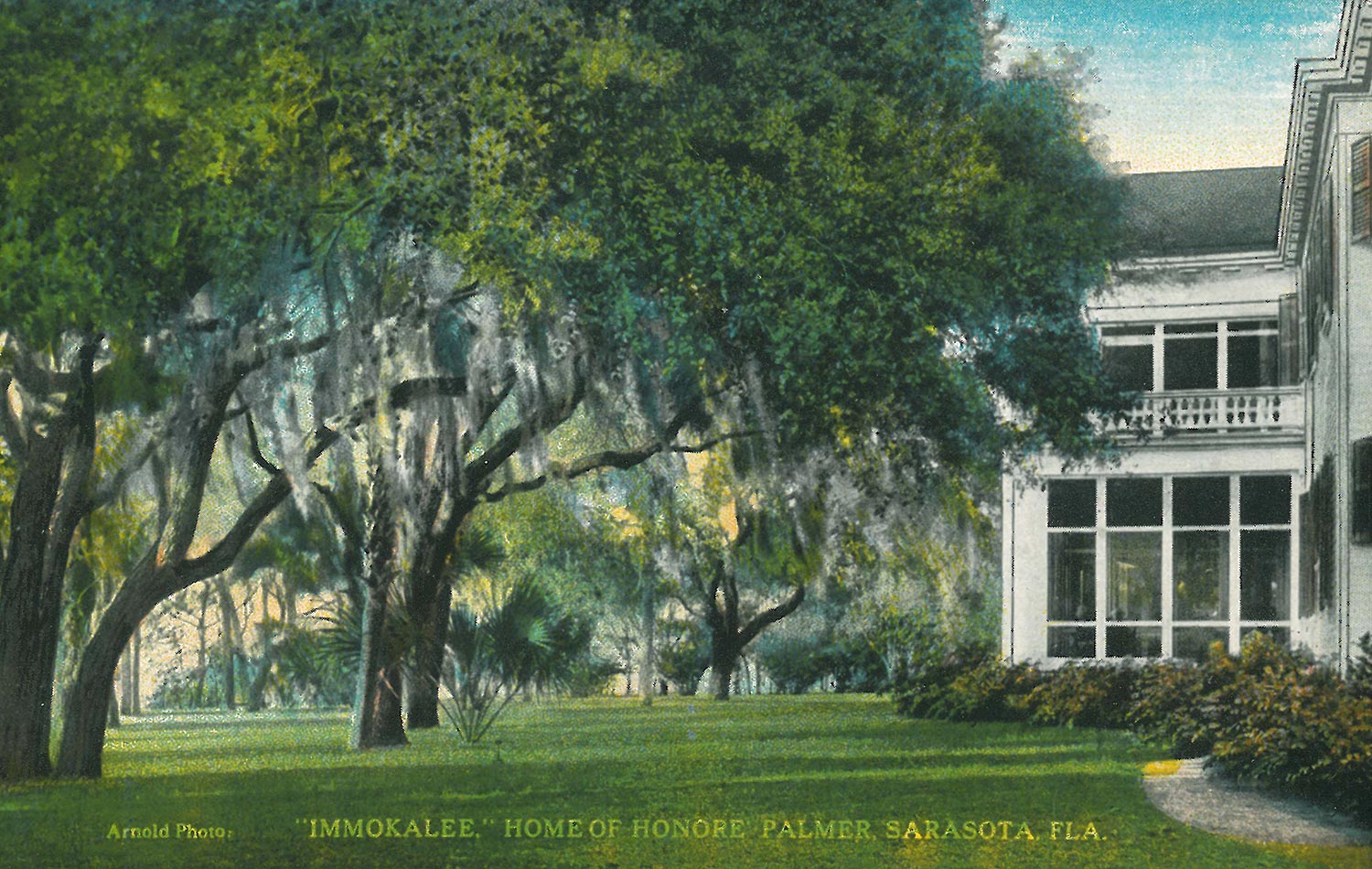
Bertha Palmer’s sons, Potter Palmer Jr. and Honoré Palmer, continued the family’s connection to Sarasota Bay. Around 1912 they established a grand estate north of present-day Peregrine Point called “Immokalee,” a Seminole word meaning “my home.” At the time, it was considered the largest residence on Sarasota Bay. The Sarasota Times described it as “a very handsome residence” furnished in northern style, featuring large airy rooms and expansive wraparound piazzas designed to capture bay breezes.
Immokalee became a landmark of Sarasota’s early social history, but tragedy struck when the mansion was destroyed by fire in 1921. Rather than rebuild, Honoré Palmer expanded the caretaker’s residence and continued wintering there. Potter Palmer Jr. later moved into The Oaks following Bertha’s death in 1918.
The Palmer estate left a lasting imprint on the surrounding area that would eventually become The Landings. Some of the majestic banyan trees still associated with the neighborhood were reportedly gifts from famous family friends including Thomas Edison, Henry Ford, and Harvey Firestone. Their presence remains a living reminder of Sarasota’s remarkable early history and the influential families who shaped it.
Creating the Landings
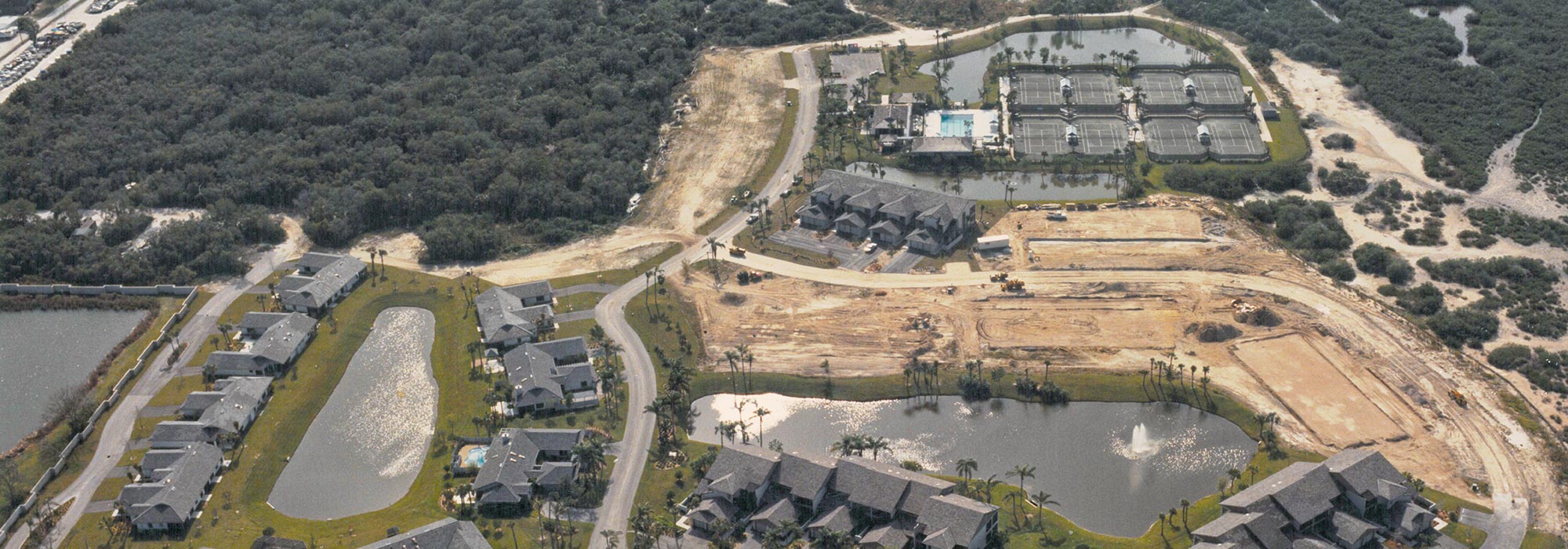
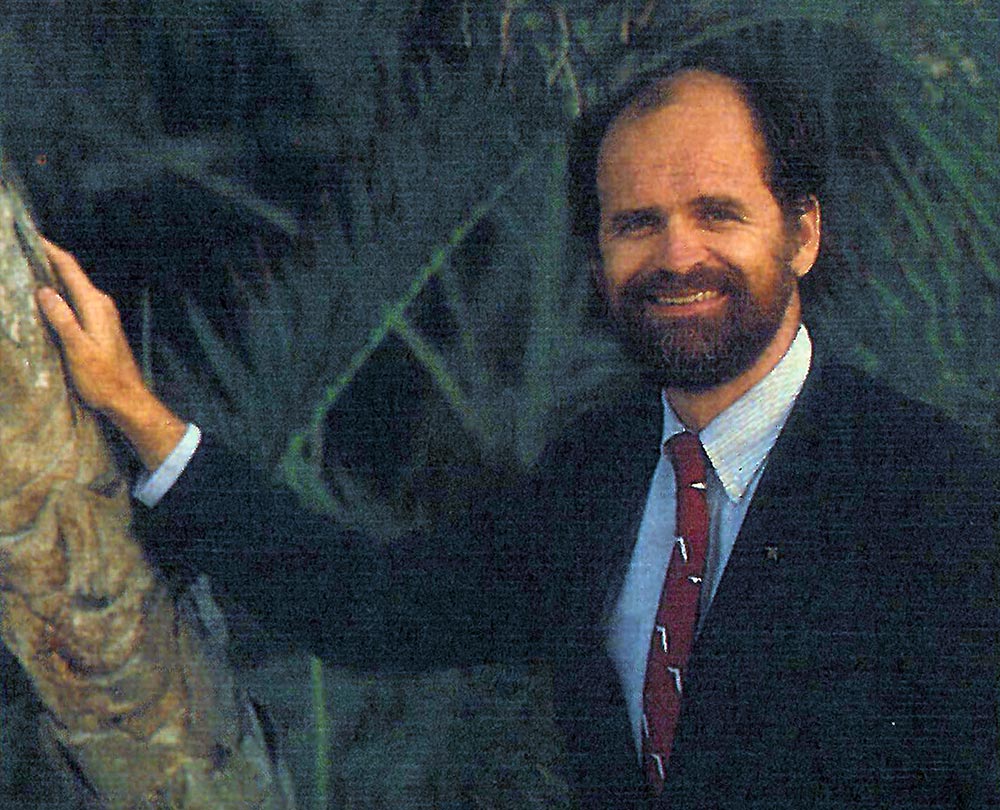
Development of The Landings as a residential community did not begin until the late 1970s and early 1980s. When developer Robert Morris first visited the property, he was captivated by its natural beauty — towering live oaks, waterfront vistas, winding creeks, and the historic atmosphere that still lingered beneath the canopy of trees. Morris, who also developed Pelican Cove, envisioned a community that would preserve the site’s character rather than erase it.
His philosophy was simple: create a lifestyle that matched the spectacular environment itself while protecting the property’s unique mystique. In 1978, Morris developed the first 76 units across 17 acres while preserving 85 mature live oaks, hundreds of sabal palms, and dozens of native wildflower species. The sales office for the new development stood where the Landings Shopping Center exists today.
The first neighborhood section, the Carriage Houses, opened in 1981 near the main entrance. Soon afterward came the distinctive Treehouse condominiums and the single-family residences that would define the community’s architectural character. Later phases, including Eagles Point villas, mid-rise buildings, and Lakeview condominiums, were completed between 1993 and 1997.
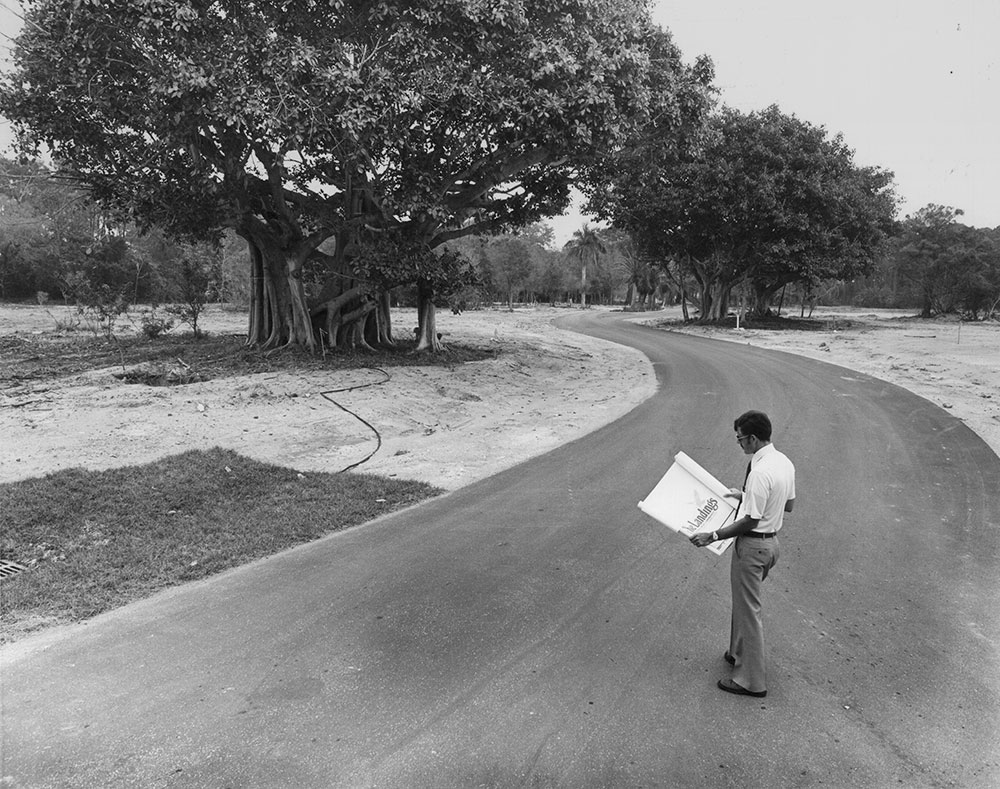
Unlike many Florida developments built around rigid grids, The Landings embraced the natural landscape. Curving roads followed the contours of the land, while nine lakes and extensive native vegetation were carefully preserved. The Treehouse section, with its wood-sided townhomes tucked beneath towering oaks draped in Spanish moss, became one of the community’s defining features. Large outdoor decks allowed residents to live within the landscape rather than simply beside it.
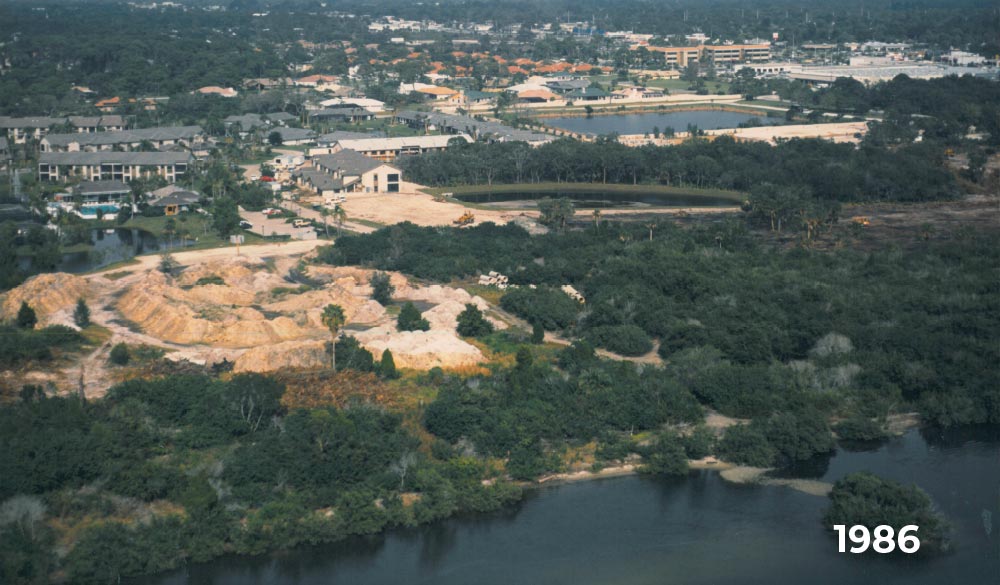
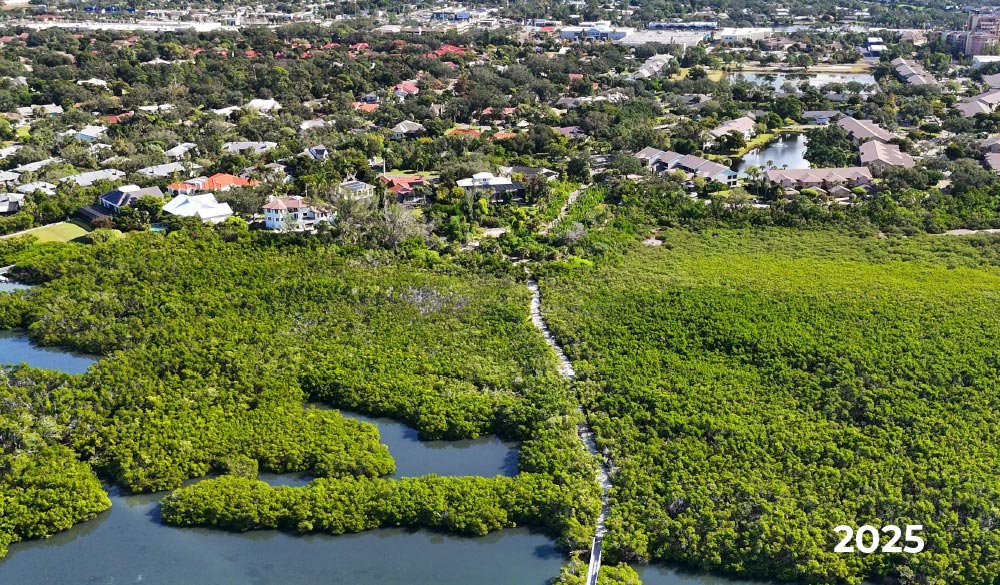
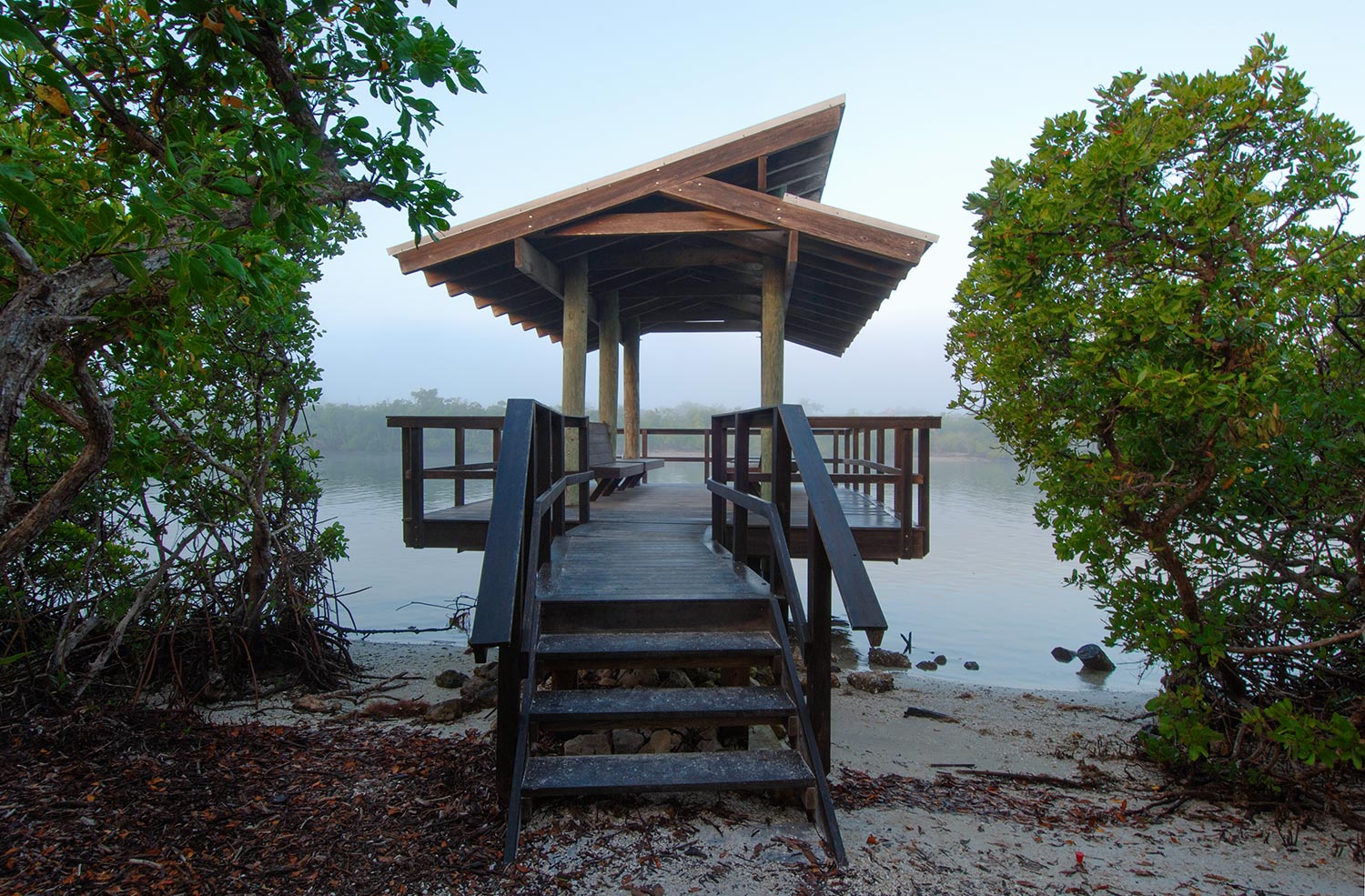
Morris also understood the ecological importance of the Maritime Hammock ecosystem, whose resilient canopy of live oaks, sabal palms, and slash pines had survived storms and coastal change for centuries. Large mangrove areas where Phillippi Creek meets Roberts Bay were protected and eventually became one of the largest privately owned mangrove preserves in the United States. Nature trails, a gazebo, and kayak and canoe launches allow residents to experience this environment firsthand.
The Landings Today
The Landings is a gated waterfront community consisting of 22 associations and approximately 700 residences, including condominiums, villas, townhomes, and single-family homes. Many homes are single-story ranch designs, while others are multi-level structures built by different architects and builders over time, giving the neighborhood a distinctive, non-uniform character.
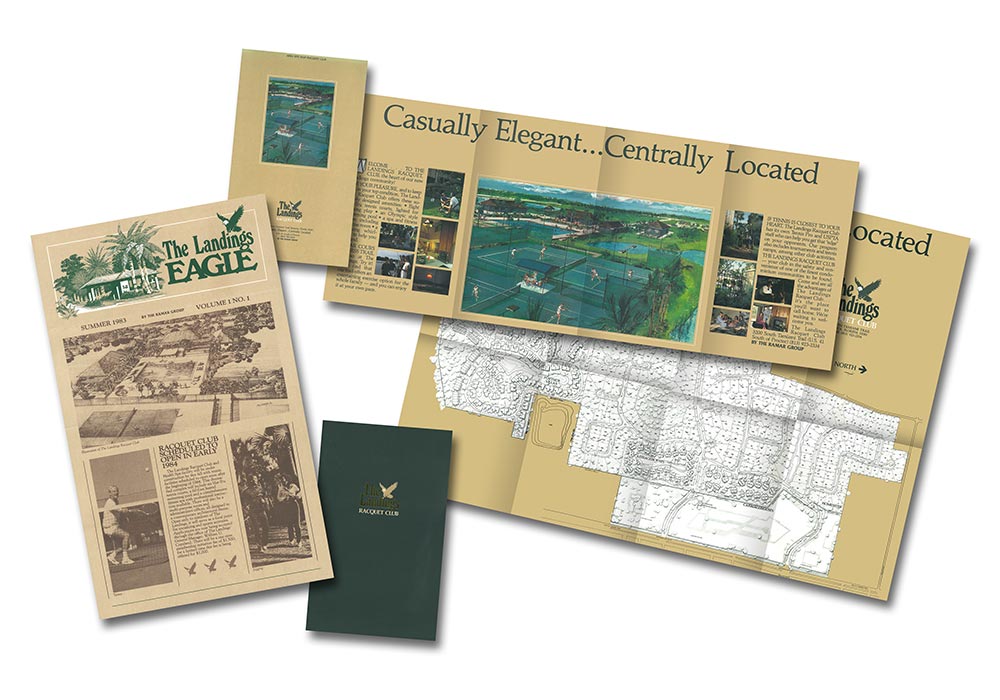
The community continues to balance natural beauty with an active social lifestyle. A racquet club with eight Har-Tru tennis courts and a fitness center serves as a gathering place for residents. Activities range from yoga and Aqua Zumba to bridge, book clubs, Mah Jongg, movie nights, poker, trivia, Canasta, and Rummikub.
Its location remains one of its greatest assets — close to Sarasota’s beaches, downtown cultural attractions, and everyday conveniences. Residents can walk to nearby shopping and dining destinations, including Publix and Starbucks for morning coffee, as well as neighborhood restaurants and cafés.
That conservation ethic still shapes the community. Residents continue to replace aging vegetation with resilient native trees and shrubs, while maintaining the lake’s protective vegetated shoreline buffer to preserve water quality and wildlife habitat. The result is a neighborhood where Sarasota’s layered history — from pioneering estates and agricultural pastures to thoughtful environmental stewardship — remains deeply connected to the landscape residents enjoy today.
The Future of The Landings of Sarasota
For more than four decades, The Landings of Sarasota has distinguished itself as a vibrant, diverse community united by an active lifestyle and an extraordinary natural setting — Roberts Bay and our 78-acre contiguous mangrove preserve, the largest privately managed stand of its kind in the country. As we look ahead, we remain steadfast in our founding commitment:
Residents and prospective homeowners can take confidence in the Board’s careful stewardship of both our financial health and our physical assets. Our mature landscape, nature trail, park, and mangrove preserve will be protected and thoughtfully maintained for generations to come. Reserves will be fully funded — including a dedicated storm reserve available only in declared emergencies — ensuring that The Landings is always prepared for whatever the future may bring. Our roads and perimeter walls will receive ongoing care, and our three entrance gates will be continually upgraded with the latest security technology, complemented by professional security personnel on site around the clock.
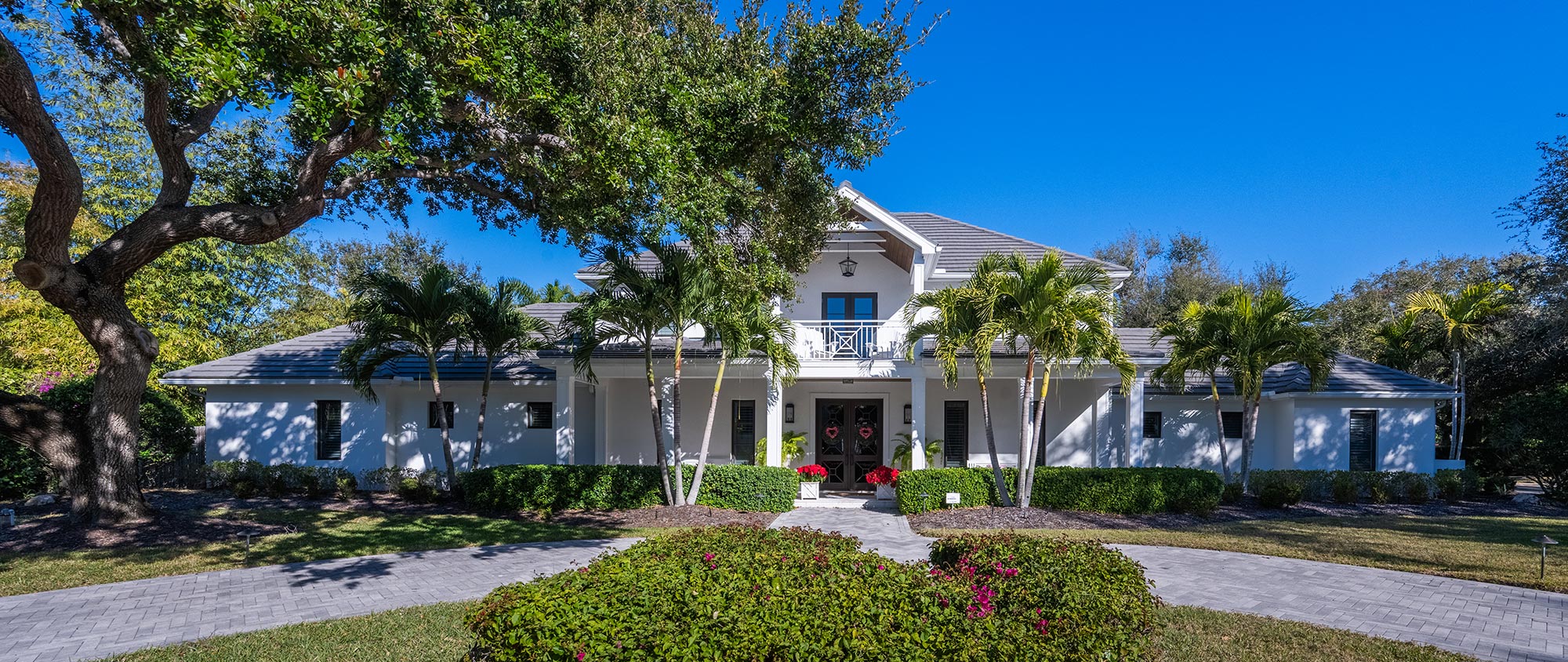
At its heart, The Landings is an oasis — a place where natural beauty, community spirit, and an active way of life come together seamlessly. It is a home that residents, their families, and guests are always glad to return to, and one we are proud to steward into the future.